From brewing beer and kombucha, to growing plants hydroponically, or checking the water quality of your aquarium, having an accurate way to test pH is essential. I learned this the hard way with a batch of pale ale that finished tasting flat and dull – the mash pH had drifted well outside the ideal range, and the paper test strips I was using never told me.
A good digital pH meter can make a world of difference to the quality of your batch, the yield of your plants, or the health of your fish. A bad one – or a good one that's poorly calibrated – is worse than nothing, because it gives you false confidence.
Best practical rule: buy a meter with two-point calibration, Automatic Temperature Compensation, and a replaceable probe. Everything else is a nice-to-have.
🔬The Science: What a pH Meter Actually Measures
The term “pH” stands for “potential of hydrogen” and is a measure of hydrogen ion concentration in a solution, on a logarithmic scale from 0 to 14. Pure water sits at 7 (neutral); below 7 is acidic, above 7 is alkaline. Because the scale is logarithmic, a solution at pH 5 is ten times more acidic than one at pH 6 – small numbers on the display are big changes in chemistry.
Inside the meter, a sensitive glass electrode develops a tiny voltage across its bulb that depends on hydrogen ion activity – roughly 59 millivolts per pH unit at 77°F (25°C). A second, reference electrode provides a stable comparison point, and the meter's microprocessor converts the voltage difference into the pH reading on the screen. That thin glass membrane is the heart of the instrument, which is why probe care matters so much (more on that below).
This is accuracy that paper test strips simply can't match. Strips rely on you judging a color change by eye, which falls apart in colored liquids like beer wort, dark teas, or nutrient solutions. A meter reads to two decimal places regardless of what the liquid looks like. If you want a deeper dive into why pH testing matters at every stage of a brew – from mash through fermentation – Beer Kit Brewer covers the full picture.
⚠ The honest correction
A pH meter does not make your beer, plants, or fish better by itself. It only tells you where you are. Cheap $10 meters with fixed probes and single-point calibration routinely drift by 0.3–0.5 pH between uses – enough to be actively misleading. If a reading matters enough to measure, it matters enough to measure properly.
🏆The Best pH Testers for Brewing Beer and Beyond
If you're a homebrewer, getting your mash pH right is critical for enzymatic activity, and the final pH affects flavor and stability. For serious brewing, a digital meter is a game-changer over strips. I've compared notes with the best pH meters for making homebrew roundup at Beer Kit Brewer and the pH meter guide for testing beer wort at Beer Brewer Guide, and the same names keep earning their place.
If you just want to cut to the chase, here are five quality pH testers that won't let you down:
- Hanna Instruments HI 98128 – waterproof, ±0.05 pH, replaceable electrode
- Milwaukee MW102 pH and Temperature Meter – benchtop-grade accuracy at a handheld price (an Amazon best seller)
- Oakton EcoTestr pH 2+ Pocket pH Meter – one-touch calibration, floats if you drop it
- Hach Pocket Pro+ pH Meter – lab-brand pedigree in a pocket format
- Apera Instruments AI312 PH60F Premium pH Pocket Tester – ±0.01 pH with a swappable probe
My companion site How to Home Brew Beers keeps a brewing-focused shortlist too – see the 5 best pH meters for making good beer if the mash tun is your main use case.
🧭What to Look For When Buying a pH Meter
The spec sheets all blur together, so here are the qualities that actually separate a keeper from a drawer ornament:
- Accuracy and resolution. Accuracy is how close the reading is to true; resolution is how fine the display steps are. Aim for ±0.05 pH accuracy or better for brewing – ±0.01–0.02 on mid-range units like the MW102 and Apera. A meter showing two decimal places but accurate to only ±0.2 is decorating, not measuring. ‘Near enough’ isn't good enough when a 0.2 swing changes your mash chemistry.
- Two-point (or three-point) calibration. The meter should calibrate against at least two buffer solutions (typically pH 7.01 and 4.01) so it corrects both offset and slope. Single-point calibration only fixes one end of the scale.
- Automatic Temperature Compensation (ATC). The electrode's voltage response changes with temperature, so a reading taken in 120°F (49°C) wort is skewed unless the meter corrects for it. ATC does this automatically – it's the single biggest reason to skip bargain-bin meters.
- Replaceable probe. The electrode is a consumable – it wears out in one to two years even with good care. A replaceable probe means a $20–$40 part instead of a whole new meter. Look for multi-sensor probes that also read temperature.
- Waterproofing. You're working over liquid. An IP67-rated body that survives a dunk (or floats, like the Oakton) protects the investment.
- Response time and stability indicator. Good meters settle in seconds and show a lock icon when the reading is stable. Cheap ones drift endlessly and leave you guessing when to trust the number.
- Ease of use. Simple setup, clear backlit display, auto-shutoff, and calibration reminders all matter more at 6 a.m. on brew day than any spec sheet suggests.
⭐Spotlight: Milwaukee MW102 pH and Temperature Meter

The MW102 Standard Portable pH / Temperature Meter earns its spot because it's an affordable yet highly accurate meter, and the Milwaukee brand is recognized across the brewing industry for durability and reliable readings. It's a microprocessor-based meter with an extended pH range, ATC via a separate temperature probe, two-point calibration, and ±0.02 pH accuracy. The corded probe design is a quiet advantage: the electrode dangles into the sample while the body stays dry, and replacement probes are cheap and easy to swap.
“A fantastic tool to have in my brewing arsenal. I originally bought it for taking readings while kettle souring, but it's been invaluable as I dove deeper into water profile and mash pH adjustment.
It's a bit more expensive than some of the cheaper meters out there, but you get what you pay for. Worth every penny.”
⭐Spotlight: Apera Instruments Pocket Testers
If you want a self-contained handheld, the Apera PH60F delivers ±0.01 pH accuracy with a flat, brush-cleanable electrode, while its big sibling the Apera PC60 Multi-parameter Tester adds EC, TDS, salinity, and temperature to the same body. That versatility makes the PC60 a genuine one-tool answer for hydroponics, aquariums, pools, and brewing. Both feature replaceable probes and easy-to-read backlit LCD screens with a stability indicator.
“After having gone through 3 different cheap meters last year I decided to spend a little extra on this one. I am not disappointed. It's well worth the money. It's fast, accurate and covers a range of tests… By far the best meter I have used without spending a couple of hundred dollars.”
⭐Spotlight: Bluelab Combo pH Meter
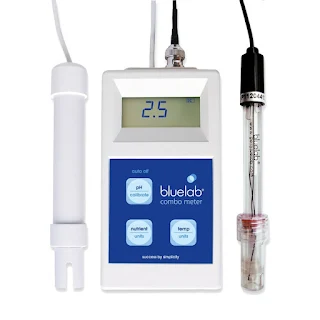
For an upmarket solution, the Bluelab Combo Meter is a portable, all-in-one meter for pH, conductivity, and temperature – the default choice in serious hydroponics setups. The pH probe is replaceable, and Bluelab backs the unit with a 5-year warranty, which says plenty about build quality.
⚗️Calibration: The Habit That Makes or Breaks Your Readings
Every glass electrode drifts. Calibration is how you pull it back to true, and it's a two-minute job:
- Rinse the probe with distilled water and blot (don't wipe – wiping builds static on the glass).
- Dip into pH 7.01 buffer, let it stabilize, and set the first point.
- Rinse again, dip into pH 4.01 buffer, and set the second point.
- Rinse a final time and you're ready to measure.
Practical tip: calibrate on every brew day, or before any measurement session where the number will drive a decision. Buffer sachets are cheap – grab a stack from Amazon or your local homebrew shop and treat them as single-use. Reused buffer contaminates, and contaminated buffer calibrates your meter to a lie.
The key point: take readings at room temperature where you can. ATC corrects the electrode's response, but the sample's actual pH also shifts with temperature – hot 150°F (66°C) mash reads roughly 0.2–0.3 lower than the same wort cooled to 68°F (20°C). Pull a small sample, cool it fast, then measure. It also spares the probe: sustained heat above about 140°F (60°C) ages the glass membrane rapidly.
💡Probe Care and Storage
Probes wear out over time – typically 12 to 24 months of regular use – but you can stretch that lifespan considerably with proper care:
- Store wet, always. Keep the probe in a proper pH storage solution (a potassium chloride mix) so the glass bulb and reference junction stay hydrated. A dried-out probe gives sluggish, inaccurate readings and fails early.
- Never store in distilled water. This one catches people out because it sounds clean and sensible. Distilled water leaches ions out of the reference electrode and destroys the probe. Storage solution or, in a pinch, pH 4 buffer – never pure water.
- Rinse after every use. Sugary wort, nutrient solution, and aquarium water all leave films that clog the junction. Rinse with distilled water and return the cap with fresh storage solution.
- Know the death signs. Slow stabilization, calibration that won't hold between sessions, or readings that wander are the electrode telling you it's done. Replace the probe – that's exactly what replaceable-probe meters are for.
🍺pH Targets Worth Knowing
Numbers make the meter useful, so here are the ranges the common jobs care about:
| Application | Target pH | Why it matters |
|---|---|---|
| Beer mash | 5.2–5.6 | Peak enzyme activity converting starch to fermentable sugar; better efficiency and flavor |
| Finished beer | 4.0–4.6 | Flavor stability and resistance to spoilage organisms |
| Kombucha | 2.5–3.5 | Below 4.2 is the food-safety line; the meter confirms the ferment got there |
| Hydroponics | 5.5–6.5 | Nutrient availability – outside this band, plants can't absorb what's in the water |
| Freshwater aquarium | 6.5–7.5 (species-dependent) | Stability matters more than the exact number; swings stress fish |
For brewers, the mash window is where the meter pays for itself – enzyme activity, flavor extraction from the grain, and downstream yeast health all hinge on landing in that 5.2–5.6 band. Beer Brewer Guide's wort testing guide goes deep on hitting and holding mash pH, and Beer Kit Brewer's pH hub covers the adjustment side – calcium additions, acid malt, and the rest.
🏁Final Verdict: Buy Once, Calibrate Often
A digital pH meter is one of those tools where the middle of the market is the sweet spot. The $10 units drift and die; the $300 lab meters are overkill for a garage or brew shed. Something like the Milwaukee MW102 or Apera PH60F – two-point calibration, ATC, replaceable probe – will give you years of honest numbers if you hold up your end of the deal: fresh buffers, proper storage solution, and a rinse after every use.
Bottom line: the meter is only half the job. Calibration and probe care are the other half, and they're the half most people skip.
This guide pairs with the 5 best pH meters for making good beer and when to replace your pH meter's electrode. For water testing beyond pH, see the best water quality meters and test kits.


