I've slung a lot of bar oil off a lot of chains over the years, and the saws that lasted were always the ones that got fed the right oil, and plenty of it. A chainsaw runs a steel chain around the bar at highway speed, and the only thing between that chain and a scorched, worn-out bar is a thin film of oil. Get the oil right and the rest of your chainsaw maintenance gets a lot easier.
You already know a dry bar is how you cook a saw, so let's skip the lecture. What most people actually want is simpler: which bar oil should I buy, and does the brand really matter? (Bar oil is a separate job from the oil that goes in the engine — don't mix the two up.)
This guide breaks down what makes bar oil different from everything else on the shelf, compares three oils that'll serve any saw well, and gives you the field tips that keep the oil where it belongs — on the chain.
Best practical rule: any purpose-made bar and chain oil beats no oil or the wrong oil, every time. Buy a dedicated bar oil, keep the tank topped up, and you've handled most chain wear before it starts.

🔬The Science of “Sling”: Why Bar Oil Is Different
A chainsaw chain moves fast enough to throw oil clean off the bar if that oil isn't built to hang on. Bar oil has two jobs: cut friction and carry away heat. To pull that off, it needs two properties most other oils don't have.
- Viscosity (thickness). Thin enough to flow through the saw's oiler pump, but thick enough to leave a protective film between the bar rails and the chain.
- Tackiness (the secret sauce). Bar oils carry “tackifier” additives — long-chain polymers that make the oil stringy and sticky so it clings to a chain doing highway speed instead of flying off into the dirt. That's exactly why plain motor oil is a poor stand-in: no tackifiers, so most of it slings straight off.
The honest correction: no oil stops throw-off completely. Some always flies off — that's why the tank empties as you cut. The goal isn't zero sling; it's keeping enough oil on the chain, long enough, to do its job.
🏆The Top-Rated Bar and Chain Oils at a Glance
If you just want the bottom line, these three are industry-standard and will serve any chainsaw well:
| Oil | Best for | Throw-off resistance | Cold-weather flow | Price |
|---|---|---|---|---|
| Husqvarna X-Guard | Daily users; hot, dry cutting | Very high | All-season blend | $$$ |
| Oregon | All-rounder; wet or cold conditions | Very high | Strong | $$ |
| Poulan Pro | Occasional use; best value | High | Free-flowing | $ |
🌲Husqvarna X-Guard: The Premium Choice
Husqvarna is about as safe a name as you can pick in the saw world. Their Bar and Chain Oil is a premium, all-season formula built to keep oil on the chain when the saw is working hard. The blend of base stocks and tackifier additives really does cut high-speed throw-off, which means more oil staying on the bar, chain, and sprocket and less wear, heat, and friction over the life of the saw.
“Great oil for chainsaw chain, sticks to chain very well.”
“Does an excellent lubrication job without throwing oil off like some inferior brands. Well worth the price to protect your chain and your saw.”

🌲Oregon Oil: The Trusted Workhorse
Like Stihl and Husqvarna, Oregon is a top-tier name in the chainsaw world. Their popular bar and chain oil is formulated for extra-high tackiness to fight “throw-off,” even in wet or cold conditions. The high film strength keeps wear off your chain and bar, guards against corrosion, and resists the sap and pitch build-up that gums up a saw on a long day.
“Saw runs perfectly with this oil. No smoking or anything. Definitely has smooth cuts in the trees I was cutting.”
“It's Oregon bar oil. Does exactly what it's supposed to. No complaints.”

🌲Poulan Pro: The Smart Value
Here's a handy industry secret: the Poulan brand is owned by Husqvarna. So you're getting a product backed by one of the biggest names in the business, usually for the lowest price of the three. Their Bar and Chain Oil is built to meet logging-industry demands — resisting high temperatures while still flowing freely in the cold.
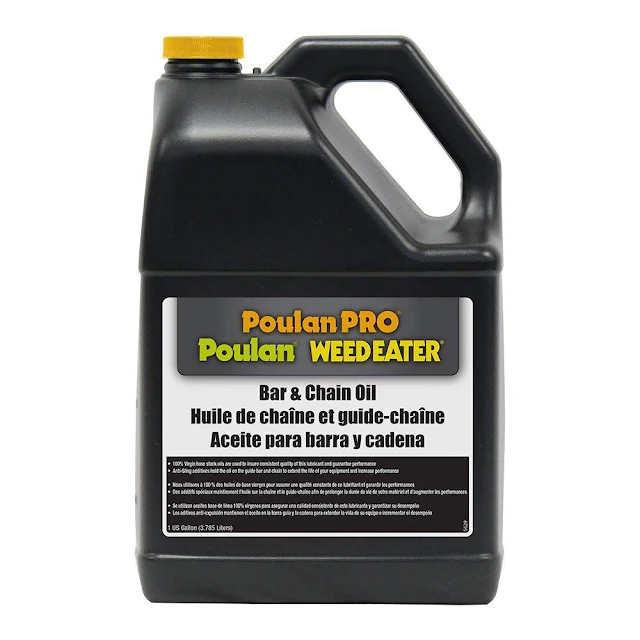
“I use this on my Stihl ms280 chainsaw and it works great. Better than Stihl bar and chain oil it seems... This oil is also tackier and appears a little heavier than the Stihl oil.”
“What can you say, it's oil, the viscosity is formulated correctly so it stays on the chain and bar and doesn't run off during operation. It does the function it was designed for.”
💡Getting the Most From Your Bar Oil
Buying good oil is only half of it. Here's how to make sure it's actually doing its job once it's in the saw.
- Top up the oil every time you refuel. A healthy saw empties its bar-oil tank at roughly the same rate as its gas tank. Fill both together and you'll never run the chain dry. If you refuel and the oil tank is still full, your oiler is blocked or turned down — sort it before you cut.
- Do the “sling test.” Start the saw, hold the bar tip a hand's width from a stump face or piece of cardboard, and rev it. A clean line of oil thrown off the tip means it's oiling. Nothing showing up means it isn't — stop and find out why.
- Keep the bar groove and oiler hole clean. Sawdust and pitch pack into the bar groove and choke the oil feed. Scrape the groove and clear the oil hole every few sharpenings; the best oil in the world can't get through a blocked channel.
- Match the oil to the weather. Bar oil thickens as it gets cold and won't pump well below about 40°F. In winter, run an all-season or winter-grade bar oil; in summer heat, a heavier “summer” weight resists throw-off better.
- Cutting near water, gardens, or stock? Go biodegradable. Every drop of bar oil ends up in the environment, so for orchard work, firewood near a creek, or anything around animals, a biodegradable bar oil is the responsible pick.
The honest correction: thinning bar oil with diesel or kerosene to get it flowing in the cold is an old trick, but it strips out the tackifiers you paid for and leaves the chain under-protected. Buy a winter-grade oil instead — it's a lot cheaper than a new bar.
❓Frequently Asked Questions
Can you use motor oil on a chainsaw bar?
In a true emergency, briefly — but don't make a habit of it. Fresh motor oil has none of the tackifiers that keep oil on a moving chain, so most of it slings off and lubrication is poor. And never use used motor oil: it's full of fine metal and grit that will scour your bar, chain, and oiler pump.
Can you use Husqvarna oil in a Stihl chainsaw (and vice versa)?
Yes. Manufacturers would love you to buy their own branded bottle, but any quality bar and chain oil works in any brand of saw. The saw doesn't know whose name is on the jug.
Should I use a “green” or biodegradable oil?
If you cut near waterways, gardens, or livestock, yes — it's the responsible choice, since all bar oil ends up in the environment. Most biodegradable oils are vegetable-based with additives to stop them gumming up. One caveat: they can oxidize and turn sticky in long storage, so don't leave one sitting in the saw for months.
How often should I top up the bar oil?
Every time you refuel. On a healthy saw the oil tank runs down at about the same pace as the fuel tank, so filling both together keeps you covered.
Why isn't my chain getting oil?
Usually a blocked oiler hole or a packed bar groove rather than the oil itself. Clear the oil hole in the bar, scrape out the groove, and check the oiler isn't turned all the way down. If the tank is draining but the chain still runs dry, the oil pump may need a look.
🏁The Bottom Line
Don't overthink the bottle. Husqvarna X-Guard, Oregon, and Poulan Pro are all quality oils that'll protect any saw — pick by how you cut: premium high-tack oil for daily or hot work, the value option for occasional firewood, biodegradable anywhere near water. The thing that actually wears out bars and chains isn't the brand you chose; it's running them dry. Buy a real bar oil, keep the tank full, and do the sling test now and then.
This guide pairs with chainsaw maintenance and the best oil for your chainsaw's engine — bar oil and engine oil are different jobs, so don't confuse the two. For one brand's track record, see the Oregon bar and chain oil review.


