That’s why anyone with an iota of sense wears the full kit: proper chainsaw gloves, a forestry helmet with a visor, and — the piece most weekend users skip — chainsaw chaps. Your helmet protects you from what falls on you. Chaps protect you from the saw itself, on the body part it is most likely to hit: your legs.
Best practical rule: if the saw is running, the chaps are on. Most leg contact happens during limbing and clean-up cuts — the “quick jobs” where people don’t bother gearing up — not during the big dramatic felling cuts.
🔬How Chaps Actually Stop a Moving Chain
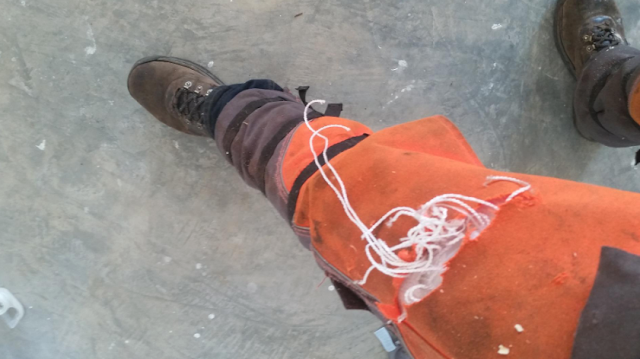
Modern chainsaw chaps are a quiet engineering marvel. The outer layer is tough polyester, but the magic happens inside: the shell is packed with long, loose fibres of cut-retardant material such as Kevlar. When a moving chain makes contact, it instantly rips these fibres out of the pad.
The fibres are then drawn into the saw’s drive sprocket, wrapping around it and jamming the mechanism to a dead stop in a fraction of a second — faster than you can react, and designed to stall the chain before it reaches your leg.
The honest correction: chaps are not a suit of armour. They are a sacrificial, one-shot intervention — a pair that has taken a chain strike is done, and goes in the bin, not back in the shed. And they only work if the saw can stall; more on that below, because it matters for electric saws.
⚠ Electric and battery saws can defeat chaps
Most chaps are designed and tested against petrol saws, which stall when the sprocket jams. Electric chainsaws deliver high torque instantly and don’t stall as easily, so they can sometimes cut through material that would stop a petrol saw dead. Wear chaps with an electric saw anyway, just don’t the same level of protection, and look for chaps rated for electric saws if that’s your main tool.
🏆The Best Chainsaw Chaps Compared
Here are the most proven safety chaps on the market. All of them meet the key standards — the differences come down to coverage (apron vs full wrap), weight, and price.
| Model | Pros | Cons | Certifications |
|---|---|---|---|
| Husqvarna Protective Wrap Chaps | 1000-denier polyester with PVC coating; adjustable waist to 107 cm (42 in); felling wedge/gear pocket; proven real-world saves in user testimonials. | Bulky over jeans; limited colour options. | ASTM F1897, ANSI Z133.1, OSHA 1910.266, UL |
| Forester Apron Chaps | Economical; good front-leg coverage; lightweight and comfortable; large side pocket; oil- and water-resistant. | Front protection only; not suited to high-powered saws. | ASTM F1897, OSHA 1910.266, UL |
| Husqvarna Technical Apron Wrap Chap | High coverage and protection; sleek and durable; water- and oil-resistant; secure fit-adjustment belt. | Higher price; can run hot in warm conditions. | ASTM F1897, ANSI Z133.1, OSHA 1910.266 |
| Oregon Protective Chainsaw Chaps | Lightweight, durable fabric; adjustable sizing; machine washable; multiple lengths available. | Less flexible for some users; limited protection from very high-powered saws. | ASTM F1897, OSHA 1910.266 |
| PROYAMA Chainsaw Safety Chaps | All-around leg protection; adjustable waist belt; budget-friendly; suits occasional and professional use. | Heavier than rivals; limited breathability in the heat. | ASTM F1897, OSHA 1910.266 |
The key decision — apron vs wrap: apron chaps protect the front of your legs only and are lighter and cheaper; wrap chaps extend the padding around the calf, which matters for limbing work where the bar moves beside and behind your legs. Casual firewood cutters can justify an apron; anyone limbing regularly should wrap.
⭐Spotlight: Husqvarna Protective Wrap Chaps
If you just want the one pair that suits most users, it’s the Husqvarna protective wrap chaps: 1000-denier polyester with a PVC coating over Tek warp protective layers, an adjustable waist and acetyl Delrin buckles for a secure, comfortable fit. I’ve looked at these closely in a dedicated review of the Husqvarna wrap chaps if you want the long version.
“Put a running saw to my left leg while limbing some cedars… the chaps stopped the chain from cutting into my thigh… I surely would have bled out before EMS got to me.” — a user report that says more than any spec sheet.

📏Getting the Length and Fit Right
Chaps should cover the tops of your boots. To find your size, measure from your waist (just below your belt) to the top of your foot. Too short leaves your ankles exposed exactly where a low limbing cut ends up; too long becomes a trip hazard — and tripping while holding a running saw defeats the entire purpose of the exercise.
Fit them snugly with the straps to the side or rear of your legs, so the protective pads stay square over the front where contact actually happens.
❓Frequently Asked Questions
Do casual users need the same chaps as professionals?
No. For occasional yard work, an economical certified pair keeps you just as legally alive as the flash ones — the Forester apron chaps are the sensible budget pick. If you cut for a living, or cut most weekends, go upmarket to something like the Husqvarna Technical Apron Wrap Chap for the extra coverage and durability.
Will an electric chainsaw cut through chaps?
It can. Electric saws have high instant torque and resist stalling when the fibres jam the sprocket, so they can sometimes cut through material that stops a petrol saw. Still wear chaps with an electric saw — just don’t rely on them for the same level of protection.
What length should chainsaw chaps be?
Long enough to cover the tops of your boots. Measure waist-to-foot-top and match the maker’s sizing chart. Short chaps expose your ankles; long ones trip you.
Can I wash chainsaw chaps?
Follow the label — some (like the Oregon pair) are machine washable, others are wipe-down only. Never bleach them or use fabric softener, both of which can degrade the protective fibres. And retire any pair that has taken a chain strike, regardless of how it looks.
🏁The Final Word: Your Femoral Artery Will Thank You
No one has ever regretted buying quality safety gear. Whichever pair you choose, check it carries the relevant certifications — ASTM F1897 and OSHA 1910.266 as the baseline — and make sure it actually fits, because gear left hanging in the shed protects nothing. Your femoral artery runs down the exact line a slipping saw follows, and it does not offer second chances. If you’re ready to sort it, start with the best safety chaps on Amazon.
This guide pairs with the best safety gloves for chainsaw work and choosing a chainsaw safety helmet to complete the PPE system, and with preventing chainsaw kickback for the technique side. For the full library, start at the chainsaw hub.


