✨ Every seized bolt I have ever fought was seized on the day someone installed it dry. The spark plug I wrestled out of my mom's mower with pliers — the whole saga is in the guide to removing a stuck spark plug — spent years welding itself into that aluminum head. The exhaust bolts that snap on every project car. The trailer hitch ball that becomes a permanent feature. All of them were one thirty-second step away from coming out with two fingers.
That step is anti-seize compound: a thick paste of fine metal particles suspended in grease, brushed onto threads before assembly. The grease burns or squeezes away over time, but the metal particles stay, forming a layer that keeps the two threaded surfaces from ever touching, corroding, or cold-welding to each other. Ten years later, the bolt turns.
An $8 tube lasts most homeowners a decade. It is the cheapest insurance in the workshop, and also one of the most misunderstood products on the shelf — because using it in the wrong place, or the right place with the wrong torque, causes real problems.

🔬Why Threads Seize: Galling, Corrosion, and Carbon
Three separate mechanisms lock a fastener, and anti-seize interrupts all of them.
- Galvanic corrosion. Put two different metals in contact — a steel plug in an aluminum head, a stainless bolt in a steel bracket — add a little moisture, and you have built a battery. One metal sacrifices itself to the other, and the corrosion products expand and jam the threads. This is the same electrochemistry that drives ordinary rust, just with the two metals doing it to each other.
- Thread galling. Under pressure, microscopic high points on the mating threads weld together and tear as the fastener turns. Stainless-on-stainless is notorious for it — a stainless bolt can gall solid on the way in, before it is even tight.
- Heat and carbon. Exhaust studs, spark plugs, and brake hardware cycle from freezing to several hundred degrees, baking any lubricant away and cementing carbon and oxide into the threads.
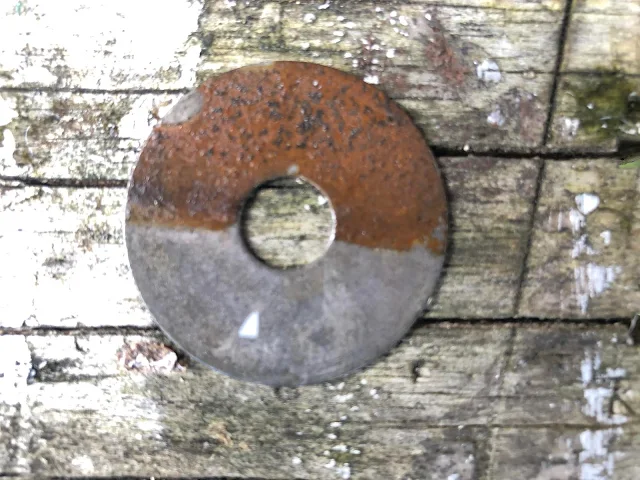
The key point: the metal particles in anti-seize — copper, nickel, or aluminum flake — do not burn off, do not wash out, and physically separate the two thread surfaces. No contact means no galling, no galvanic cell, and no bake-on bond.
🆚Anti-Seize vs Grease vs Threadlocker
These three live near each other on the shelf and do three different jobs. The site has covered the grease side in depth — see WD-40 vs white lithium grease vs silicone — so here is where anti-seize fits.
| Product | Its job | Belongs on |
|---|---|---|
| Anti-seize | Guarantee future disassembly of a static joint | Threads that stay put but must come apart later: plugs, exhaust studs, hitch balls, wheel hub faces |
| Grease | Reduce friction in a moving joint under load | Hinges, bearings, pivots, gears — anything that rotates or slides in service |
| Threadlocker | Stop a fastener loosening from vibration | Bolts that must never back out: mower blade hardware, equipment guards |
Bottom line: anti-seize and threadlocker are opposites. One promises the bolt will come out; the other promises it will not. Deciding which promise a fastener needs tells you which tube to reach for — and it is never both.
🧭Which Type: Copper, Nickel, or Aluminum
- Copper-based (the garage default). Rated to roughly 1,800°F. Handles exhaust systems, brake hardware, small-engine fasteners, and general shop work. If you own one tube, own this one — Permatex copper anti-seize is at every AutoZone, O'Reilly, and Home Depot.
- Nickel-based (the specialist). Rated past 2,400°F and chemically inert where copper is not. The right choice for stainless steel fasteners (the galling problem), oxygen sensors, and anywhere copper contamination matters.
- Aluminum-based (the general purpose original). Fine for most ambient-temperature work — gate hardware, trailer fittings, outdoor fasteners. Avoid on hot parts. There is also a metal-free ceramic variety, useful where any metal particle is unwelcome — around ABS sensors and modern brake hardware.
Practical tip: for the outdoor jobs this site cares about — the bolts on a gate you also maintain with the right hinge oils, mower deck hardware, trailer fittings living in road salt — copper does everything you need.
🧰How to Apply It (Less Is More)
- Clean the threads first. Anti-seize over rust just lubricates the rust. Wire-brush the threads; badly corroded loose hardware responds well to an apple cider vinegar soak, and on a corroded hole, chase it with a tap or use a penetrant like CRC 5-56 and work it clean.
- Apply a thin film to the threads only. Brush it on the male threads. It spreads itself as the fastener turns — a blob squeezes out, migrates, and gets silver fingerprints on everything you own for the rest of the week.
- Keep it off the sealing surfaces. On a spark plug, that means threads only — never the gasket seat, never the electrode.
- Torque it correctly — and here is the money fact. A torque spec assumes a certain friction in the threads. Anti-seize slashes that friction, so the same wrench reading drives the fastener much harder into its joint. The standard practice is to reduce the applied torque by roughly 20 to 30 percent on a lubricated fastener, or follow the compound manufacturer's chart. Torque a lubricated bolt to its dry spec and you can stretch it past yield — the bolt is now weaker than the day you "protected" it.
⚠ Important warning
"Snug plus a quarter turn" habits transfer fine. Torque-wrench habits do not — the number on the wrench means something different once the threads are lubricated. This single fact explains most of the arguments below.
⚠️Where NOT to Use It
- Modern spark plugs, usually. Here is the twist ending to the stuck-plug story: most current plugs ship with plated shells designed to resist seizing on their own, and NGK explicitly advises against adding anti-seize — it changes the torque relationship enough to risk over-tightening and thread damage. Check your plug maker's guidance. On a vintage engine with bare-steel plugs in an aluminum head, the old advice still holds: threads only, torque reduced. Either way, get the spark plug gap right before it goes in — and the same thinking applies when replacing a chainsaw spark plug.
- Lug nuts — the most argued topic in every garage. The honest correction: anti-seize on lug studs works exactly as advertised, and that is the problem. It changes clamping force at a given torque, and wheel studs are torqued to a dry spec by every vehicle manufacturer. The safe position is dry, clean studs torqued to spec. If you choose to lubricate them anyway, you have taken on the job of reducing torque appropriately and re-checking after driving — and if that sentence made you nervous, install them dry.
- Anything a threadlocker job. Mower blade bolts are the classic: they live in vibration and must never loosen. Anti-seize there is actively dangerous.
- Electrical grounds and sensor tips. The paste is conductive (copper especially) where you do not want stray conduction, and insulating where you want a clean ground path. Keep it on threads, not contacts.
🏁Final Verdict: Assembly Is When You Choose
Penetrating oil is what you buy after the problem exists. Anti-seize is what you buy so the problem never does. Every fastener gets decided at assembly time: dry to spec, locked with threadlocker, or protected with anti-seize and torqued accordingly. Choose deliberately, and the next person to pick up a wrench on that machine — probably you, ten years from now — gets a bolt that just turns.
This guide pairs with removing a stuck spark plug for when the damage is already done, and CRC 5-56 uses around the home and small engines for the penetrant side of the story. For rusted hardware beyond saving, start at the best ways to remove rust from metal.


