🧰Rust Removal Is Only Half the Job
Here is the most common rust mistake in any home workshop, and I have made it myself. You soak a spanner, chisel, saw plate, or jar of old fasteners in citric acid, Evapo-Rust, or CLR. The rust lifts away. The metal looks clean, almost new. You rinse it, leave it on the bench, and come back a few hours later to find a faint orange haze already creeping back across the surface.
That haze is flash rust, and it is not a sign the cleaning failed. It is a sign the job was only half done.
Rust removal exposes clean metal. Clean metal looks better, but it is also chemically ready to react with oxygen and moisture. The old oxide layer is gone. So is whatever oil, paint, seasoning, wax, or factory coating used to sit on top of it. Without drying and protection, a freshly cleaned surface can rust faster than the original tool ever did.
This guide covers the second half of the job: what to do in the minutes, days, and months after the rust comes off, so it does not come back.

🔬Why Clean Steel Rusts So Fast
Rust needs three things: iron, oxygen, and moisture. A freshly cleaned tool supplies the iron in its most exposed state, the air supplies the oxygen, and the moisture is usually still sitting on the tool from the rinse you just gave it.
Water also hides where you cannot see it. Pits left behind by old corrosion, threads, seams, hinges, screw heads, stamped maker's marks, and the joint where a wooden handle meets a metal socket all hold moisture long after the visible surfaces look dry. Warm afternoons followed by cool nights make it worse, because temperature swings pull condensation out of the air and deposit it straight onto cold steel.
There is one more culprit: residue. If acid from a citric acid bath or a stronger cleaner like hydrochloric acid is not rinsed away completely, it keeps quietly attacking the surface after you have packed the tool away. I learned that one the hard way in my own acid experiment, where the soak did as much damage as the rust.
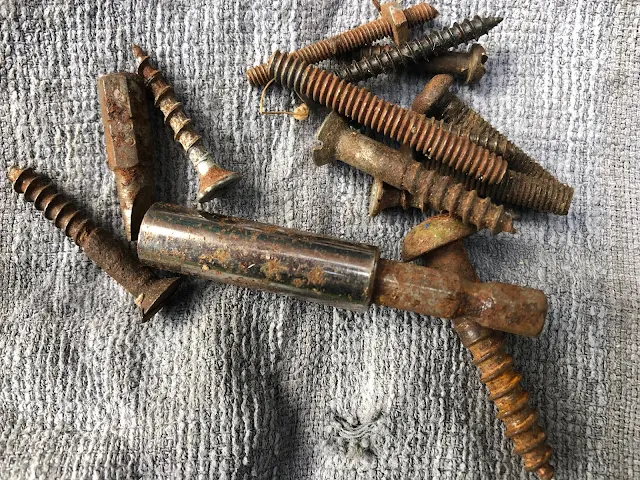
Rusty fasteners from a damp shed. Every pit and thread on these screws is a moisture trap, which is exactly why rust returns so quickly after cleaning.
The key point: flash rust is a thin orange film that appears soon after cleaning. It almost always means the surface was left wet, exposed, or unprotected, not that you need a stronger rust remover.
⏱️The Immediate Aftercare Routine
The full rust-prevention sequence looks like this:
- Remove the rust with your chosen cleaner or abrasive.
- Rinse thoroughly to get the cleaner off the metal.
- Brush out the loosened rust, then rinse again.
- Neutralise if acid was used: a weak baking soda rinse helps stop leftover acid working on the steel.
- Dry the metal fully, immediately with a towel.
- Drive moisture out of hiding spots: seams, threads, hinges, and pits need heat or air, not just a wipe.
- Apply protection: oil, wax, grease, paint, or coating, matched to the job.
- Store it somewhere with low humidity.
- Check it again the next day before rust gets a second chance.
Important warning: neutralising with baking soda helps after acidic cleaning, but it does not replace drying. A baking soda rinse still leaves water behind, and water left behind means rust comes back.
For small parts with threads or internal surfaces, like bolts, hinges, screws, and folding mechanisms, drying the outside is not enough. Shake them, blow air through them, warm them gently, and only then oil them.
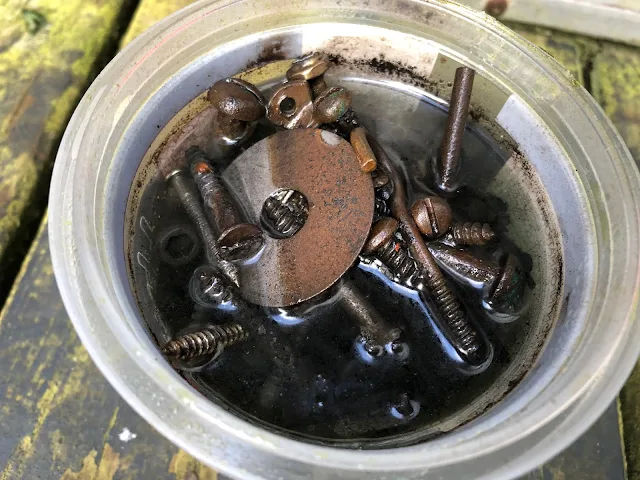
Parts in a rust-removal bath. The moment they come out of a soak like this is the moment the clock starts: rinse, dry, and protect before flash rust sets in.
The 10-minute aftercare rule: the first ten minutes after rinsing are the ones that matter. That is the window in which bare steel should be dried and given its first protective film, especially after citric acid or vinegar treatment.
💨How to Dry Tools Properly After Rust Removal
Drying is the step people underestimate most, so it deserves its own section. Match the method to the tool:
- Towel drying: fine for flat tools - blades, spanners, saw plates, and other surfaces you can actually reach.
- Warm air: a hair dryer or a sunny window ledge is best for hinges, pliers, clamps, threaded parts, drill bits, and small hardware where a towel cannot follow.
- Compressed air: the winner for screw heads, sockets, springs, folding mechanisms, and seams. It physically blasts water out of places nothing else reaches.
- Sunlight: useful but unreliable in damp weather, which describes a fair chunk of the New Zealand calendar.
- A low oven: for plain metal parts only. Nothing with plastic, rubber, wood, paint, or glue, and nothing where a hardened cutting edge could be affected by heat.
What not to do: leave tools to air dry in a damp shed, put wet tools straight into a toolbox, dry the outside of a hinge while moisture sits inside the joint, or blast heat at a chisel with a wooden handle and a tempered edge.
🛡️Choosing the Right Protection: Oil, Wax, Grease, or Paint
There is no single right coating. There is a right coating for each job, and the worst choice is usually no coating at all.
| Protection | Best suited for | Main drawback |
|---|---|---|
| Oil | Hand tools, blades, chisels, planes, spanners, sockets, and moving parts | Attracts dust, needs reapplication, can transfer onto wood or workpieces |
| Wax | Saw plates, plane soles, squares, clamps, measuring tools, and tools handled often | Less useful inside hinges and threads |
| Grease | Threads, bolts, machinery parts, trailer hardware, and long-term storage | Messy, and too heavy for fine tools |
| Paint or primer | Brackets, gates, frames, outdoor steel, and machinery guards | Surface prep matters - paint over rust or damp metal fails quickly |
| Clear coat | Display items, decorative metal, and visible bare-metal finishes | Can chip, and trapped moisture under the coating causes trouble |
| Rust converter | Rough outdoor steel where full rust removal is not realistic | The wrong choice for precision tools, knives, cookware, or bare-metal restoration |
Best oils and waxes for hand tools
The useful rule here is to match the coating to how often the tool gets used. Quick-use tools need light protection. Stored tools need heavier protection.
- Mineral oil: the cheap, safe default for general tool protection.
- Camellia oil: the traditional choice for woodworking tools, knives, and Japanese-style blades, because it is light and does not stain timber.
- Paste wax: ideal for plane soles, saw plates, chisels, and cast iron machine tables. Cleaner to handle than oil and does not attract dust the same way.
- Boeshield-style protective sprays: built for tools living in damp sheds; they dry to a waxy film.
- Light machine oil: for moving joints in pliers, secateurs, and shears.
- Lanolin-based products: the heavy hitters for coastal or harsh environments.
While you have the oil out, remember the other half of many tools is timber. A chisel or axe with a freshly protected blade and a neglected handle is still a tool on borrowed time, and we have covered the best oils for protecting an axe handle separately.
🎨When to Paint or Prime Instead of Oiling
Oil and wax suit tools that need a working bare-metal surface. Paint is the better answer when the metal lives outside, does not need to slide, cut, grip, or measure, and is exposed to rain, soil, salt air, or constant humidity. Think garden tools, gate hinges, outdoor brackets, trailer parts, steel shelving, mower decks, fences, and shed hardware.
The basic method:
- Remove loose rust by sanding, wire brushing, or chemical treatment.
- Degrease: methylated spirits is a handy workshop degreaser, though as that guide explains, it can also soften some existing paint, so test first.
- Dry thoroughly.
- Sand or abrade the surface so the primer has something to grip.
- Apply a rust-inhibiting primer.
- Apply a compatible topcoat and let it cure fully before exposing it to the weather.
Important warning: paint is not magic. If rust, moisture, oil, or acid residue remains underneath, the film blisters and fails, and now you have rust forming where you cannot see it.
For moving outdoor metal like gates and hinges, paint alone is not enough either - the pivot points still need lubrication, and we have a full guide to the best oils for an exterior gate covering exactly that.
🏚️Storing Tools in Damp Sheds and Garages
A shed does not need to leak to rust your tools. It only needs trapped humidity and temperature swings.
The common storage mistakes: toolboxes trap moisture if damp tools go inside; concrete floors encourage condensation; sheds swing between hot days and cold nights; coastal air accelerates everything; leather sheaths and canvas rolls hold moisture against blades; and wooden handles hide wetness right where they meet the metal socket.
Practical fixes:
- Keep tools off concrete floors.
- Use wall racks where air can circulate.
- Add desiccant packs to drawers and toolboxes.
- Use vapour corrosion inhibitor (VCI) paper or capsules in closed storage.
- Store precision tools separately from everyday gear.
- Do not leave tools in a vehicle overnight if condensation is common.
- Never store a blade long-term in a wet leather sheath.
- Knock the soil off garden tools before they go away - soil holds moisture and, in some cases, fertiliser salts.
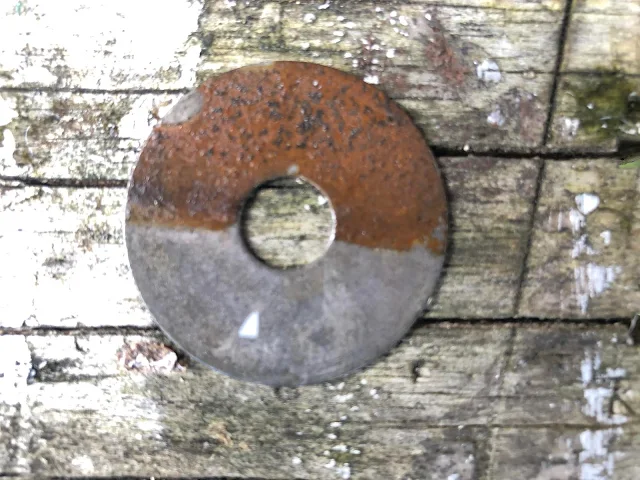
This is what damp shed storage does to unprotected steel. None of these parts needed to end up like this - dry storage and a film of oil would have prevented most of it.
Silica gel, tool rolls, and VCI paper
- Silica gel works well in drawers, small toolboxes, and sealed containers, but it saturates. Dry it out or replace it, or it becomes decoration.
- Tool rolls are great for organisation, but ordinary fabric holds moisture. Waxed canvas or treated rolls are better in damp environments, and tools should always go in dry and oiled.
- VCI paper and emitters shine for stored parts, blades, taps, dies, and drill bits in closed drawers and cases. They are far less useful in an open shed with constant air exchange.
- Drawer liners prevent scratches, but some foam liners trap moisture, and rubber mats can hold water against metal. Check under them occasionally.
⚙️Special Cases: Cast Iron, Stainless, Chrome, and Plated Metal
Cast iron rusts almost immediately, so dry it fast and oil it straight away. Cookware needs proper re-seasoning with a cooking oil, not whatever was nearest on the workshop shelf. Machine tables do well under paste wax or a specialist table protectant.
Stainless steel can still rust, especially when contaminated with ordinary steel particles from steel wool or shared abrasives. Clean with the grain, skip the steel wool entirely, and dry it after cleaning like anything else.
Chrome needs care once the plating is damaged, because acids creep under failing chrome and lift it from beneath. Use mild cleaners and keep contact times short.
Plated tools and antiques reward restraint. Aggressive polishing removes plating and patina, and on older pieces the patina may be most of the value. Light oil and gentle storage beat enthusiasm.
⛔Mistakes That Make Rust Return Faster
- Leaving acid residue behind after cleaning.
- Letting wet steel air dry in a damp space.
- Putting damp tools in a closed toolbox.
- Using steel wool on stainless steel.
- Skipping the oil or wax step entirely.
- Storing blades in leather sheaths.
- Hanging tools on a cold shed wall that runs with condensation.
- Painting over damp metal.
- Handling clean steel with sweaty hands and putting it straight into storage - fingerprints etch.
- Storing tools near pool chemicals, fertilisers, or salt.
- Forgetting that rust hides in pits and threads, not just on flat surfaces.
🔁A Simple Rust-Prevention Routine for the Workshop
For everyday workshop life, the routine is short: after use, wipe tools clean of moisture, sap, soil, fingerprints, and dust. Cutting tools get a light wipe of oil or wax. Moving tools get a drop of oil in the joint. Storage is dry and separated. Inspect monthly through the damp seasons and reapply protection whenever a surface feels dry, sticky, or exposed.
The same thinking applies to powered gear. A mower deck caked in wet clippings is a rust farm - clean it out, and keep the engine side of the maintenance up with the right lubricant, covered in our guide to what oil a lawn mower takes. A chainsaw bar and chain are protected largely by their working oil film, which is why running the correct bar and chain oil matters for corrosion as much as for cutting.
Worked example - a chisel coming out of a citric acid bath:
- Rinse it well.
- Dry it with a towel.
- Warm the blade gently to chase out remaining moisture.
- Wipe it with mineral oil or camellia oil.
- Wax the blade if it is going into long-term storage.
- Keep it in a dry rack or treated roll.
- Check it the next day for any orange haze.
Flash rust fix: if a faint orange haze appears after cleaning, scrub it lightly with a nylon pad, rinse, dry properly, then oil or wax immediately. Do not reach for a stronger acid unless real rust is still bonded to the metal.
🩺When Rust Keeps Coming Back
If a tool keeps rusting despite your best efforts, work through the likely causes and fixes:
| Likely cause | The fix |
|---|---|
| The storage area is too damp | Move storage, or switch to a sealed toolbox with desiccant |
| Acid residue is still on the part | Re-clean, neutralise properly, and dry fully |
| Pitted metal is holding moisture | Sand the pitted areas back further before protecting |
| The protective coating is too thin | Step up to a heavier wax, grease, or coating |
| Exposure to salts or fertilisers | Relocate storage away from chemicals and coastal spray |
| A paint film has failed | Strip back to sound metal, prime, and repaint |
| Iron particle contamination on stainless | Re-clean with the grain using dedicated non-steel abrasives |
| Cheap plated steel that will not hold up | Replace with stainless, galvanised, or coated hardware |
✅The Final Word
The whole subject reduces to one rule. After rust removal, metal needs to be clean, dry, protected, and stored somewhere that does not keep feeding it moisture. Removal strips the corrosion; aftercare decides whether it stays gone. Treat the two as one job, and the orange haze stops being a recurring guest in your workshop.
This guide is the companion to our citric acid rust removal guide and our cautionary tale about hydrochloric acid and rust - those get the rust off, this one keeps it off.


